Who Makes Fiber Optic Cable? Understanding the Global & US Supply Chain
John
How to Choose Reliable FTTH Drop Cable Suppliers: 5 Critical Sourcing Checks
A bad FTTH drop cable doesn’t fail at the loading dock. It fails eight months in — at 2 a.m., in the rain, on a Tuesday. Intermittent dropouts. A truck roll. A customer escalation. Multiply that by 50,000 subscribers, and you’ve got a project that bleeds margin for years.
This guide exists because we get the same five questions, over and over, from procurement teams across 100+ countries. After 20+ years of manufacturing drop cable at our Huizhou, Shenzhen, Jieyang, and Zhejiang plants, we’ve seen the same mistakes cause the same field failures — and we’ve seen which sourcing decisions actually hold up under a 10-year service load.
Below are the standards we use to audit our own production lines. You can copy this exact checklist to audit any supplier. If a vendor can’t pass all five, walk away. The few days you spend on qualification will save you hundreds of thousands in field failures.
Standard 1: Raw Material Quality — The Foundation
Why this matters first
Drop cable lives outside. UV, monsoons, freeze-thaw cycles, and constant tension. Cheap resin cracks, the fiber microbends, and attenuation drifts. By month eight, your initial “savings” are swallowed by the maintenance budget.
The three checkpoints we use on our own line
Fiber core — get the brand name in writing. Ask exactly which optical fiber is inside. Not just the spec sheet — demand the manufacturer’s name. Our drop cable uses Corning, YOFC, or Furukawa G.657A1 / G.657A2 bend-insensitive single-mode fiber. We buy direct from the fiber house. Every reel is batch-traced, and we hand over the Material Test Certificate (MTC) without being asked.
If a supplier can’t tell you their fiber source, you are buying a lottery ticket.
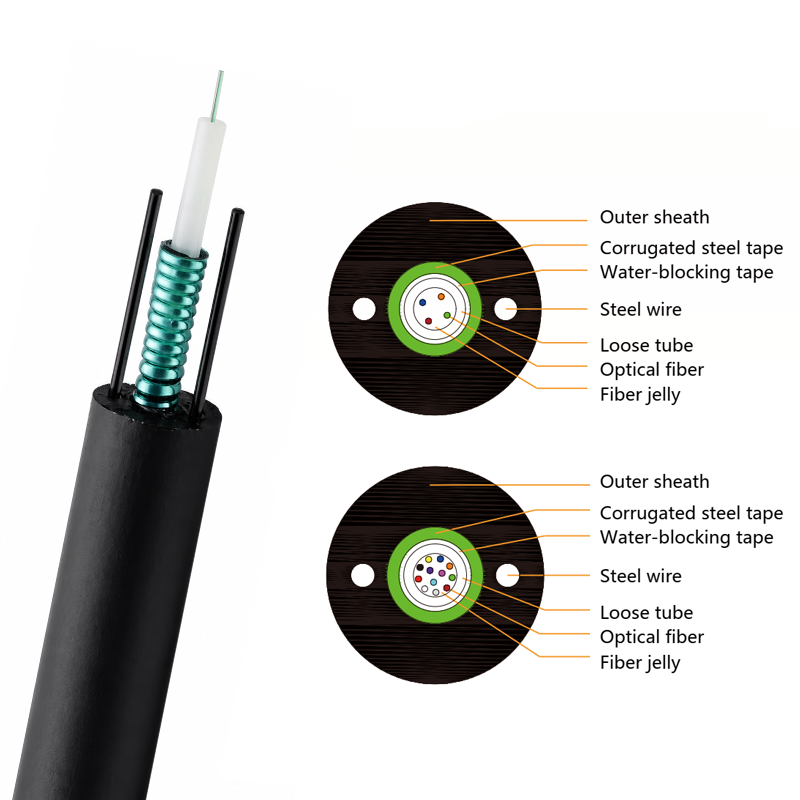
Strength member — KFRP, not steel. We use KFRP (Aramid Fiberglass Reinforced Plastic) in roughly 95% of the FTTH drop cable we ship. It is non-conductive (no lightning risk, no indoor-transition grounding headaches) and 30% lighter than steel. Steel is a 1990s default that survived because it was cheap. Today, it is a leading cause of rodent-induced and surge-induced field failures in returned cables. (Note: There are still edge cases like extreme-span aerial projects where steel wins. For everything else, we recommend KFRP.)
Jacket — name the compound, not just the color. Outdoor equals UV-stabilized PE (usually black). Indoor equals LSZH. If your supplier cannot tell you the resin part number and the temperature rating within 30 seconds, they are not the partner you need. We print the jacket compound on every reel label. So should they.
Our Experience Fingerprint: In Q3 2024, we tested 14 samples of “factory-direct” drop cable sourced through Alibaba. 6 had attenuation above 0.40 dB/km at 1310 nm — well over the G.657A2 spec limit. None had a traceable MTC. The “factory” turned out to be a trading office in Shenzhen. Lesson: Paper certifications matter — but only if you can verify them.
Standard 2: Manufacturing Capacity & Lead Time
Why this matters
A two-week delay on a 200 km drop cable PO doesn’t sound like much. But it is. It stalls a district’s activation, triggers penalty clauses, and leaves installation crews paid but idle. We’ve watched $4M projects pushed back a full quarter over a mere 15-day slip.
What to ask — and what a real answer sounds like
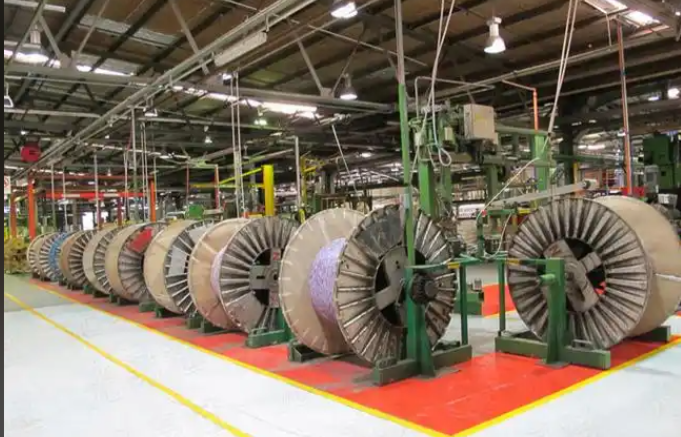
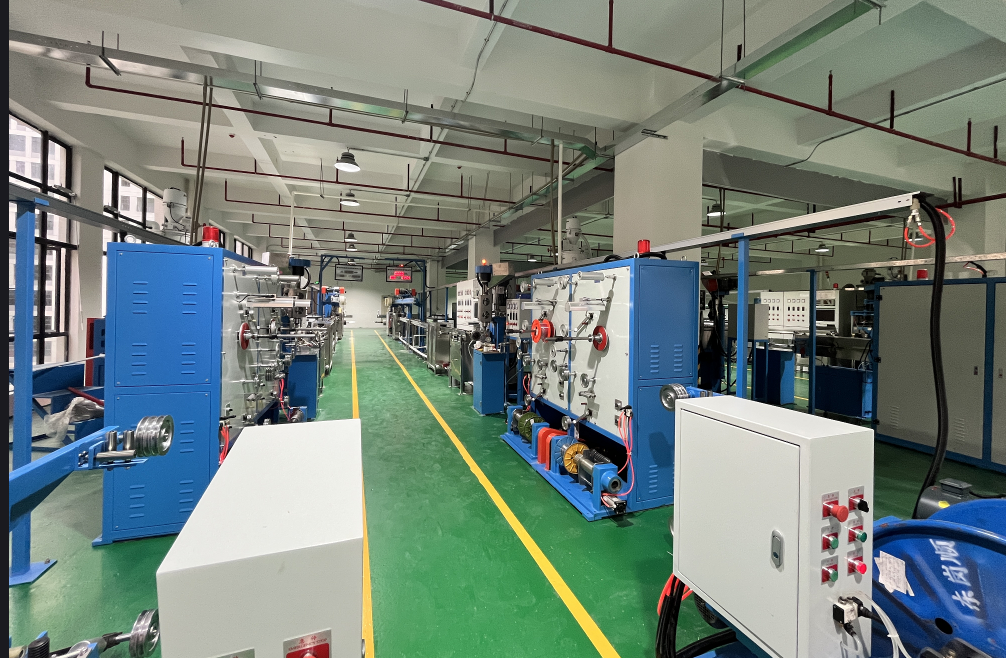
Production footprint with hard numbers: “How many extrusion lines do you run? What’s the monthly output?” A real factory answers with specifics. Our own footprint includes:
Shenzhen Owire Communication Technology: R&D, Cat5e–Cat8 LAN cable (~20,000 boxes/month)
Jieyang Vasco: LAN cable and patch cords (~50,000 boxes/month)
Zhejiang Owire: OPGW and coaxial cable With five distinct production bases, if a supplier says “big factory” without numbers, you’re talking to a broker.
Multi-base risk hedging: A single-site factory is always one regional power outage away from a delayed shipment. Five bases means we can reroute a 50 km PO from Huizhou to Jieyang within 48 hours. This is a quietly enormous advantage most buyers never ask about — until something goes wrong.
Lead time in peak season: “What’s your average lead time in Q3 and Q4?” Real answer: 15–25 days. We maintained an 18-day average even during the worst of the 2025 peak season. If you hear “fast delivery” with no concrete numbers, it’s a major red flag.
Factory verification (the smart way): You don’t have to fly out to China. Ask for a 2-minute live factory-tour video, a current business license (look for “manufacturer” in the business scope, not “trading company”), and a recent production-line photo dated within 30 days. We send all three within 24 hours of an inquiry. A broker won’t be able to.
Standard 3: Strict Quality Control & Certifications
Why this matters most
Returns are the silent killer of telecom rollouts. Open 50 drums, find just 5 reels out of spec, and you suddenly face a logistics crisis, a customer escalation, and a ruined reputation. Quality control isn’t a line item; it’s the entire game.
The four tests every batch must pass before shipping:
Tensile test – Rated pulling force verified, not just labeled.
Crush test – Survives wall-clip compression without microbending.
Temperature cycling – Attenuation stays strictly within spec from −40°C to +70°C.
OTDR attenuation – Within dB/km spec at 1310 nm and 1550 nm, backed by a per-reel curve.
Certifications that matter by destination market:
Market
Required Certifications
EU General
CE, RoHS
EU Buildings (B2B)
CPR Rated (B2ca, Cca, Dca, Eca)
US Indoor
UL Listed (CMP Plenum, CMR Riser)
China Domestic
CCC
Global Audits
SA8000, ISO 14001, ISO 9001
The QC lab question no one asks — but you should:
“What specific test equipment is on your QC floor?” A factory that says “we test everything” generically is often hiding something. A professional manufacturer names the instruments:
Fluke DTX-1800 / DSX Series cable analyzer (Cat-series LAN certification)
HP Agilent E5071C vector network analyzer (High-frequency performance)
Oxygen index + vertical burning testers (For genuine LSZH fire performance)
Programmable temperature/humidity chambers (−40°C to +70°C)
📌 Premium vs. Substandard Drop Cable: The Cheat Sheet
Inspection Point
Premium Drop Cable (Trusted Manufacturer)
Substandard Drop Cable (Low-Cost Broker)
Fiber Core
Corning / YOFC G.657A1/A2, batch-traceable
Unbranded fiber, no traceability document
Strength Member
KFRP (non-metallic, anti-EMI)
Steel wire (rusts, conducts lightning)
Outer Jacket
UV-stabilized PE / genuine LSZH, marked compound
Recycled or off-spec plastic, no compound ID
Attenuation @ 1310nm
≤ 0.35 dB/km
0.45–0.60 dB/km (or completely unspecified)
Tensile Strength
Rated & tested, with official test report
Rated on label only — no actual test record
Crush Resistance
1000 N/100mm verified
Not tested, or tested only on a “golden sample”
Temperature Range
−40°C to +70°C verified
Stated on paper, never actually verified
Certifications
ISO 9001, CE, RoHS, CPR, UL (per market)
Self-declared, certificates unverifiable
OTDR Report
Yes, with reel-specific curve provided
Generic batch summary sheet only
Length Accuracy
±1% of marked length
Often short-shipped by 3–5%
Warranty
10–25 years (manufacturer-backed)
1 year or sold “as-is”
Standard 4: OEM/ODM Customization
Why this matters
A factory that only ships “one SKU, one spec” cannot support a global roll-out. You often don’t find this out until the second shipment, when the wrong legend is printed on the jacket and customs paperwork rejects the container.
The four customization checkpoints:
Cable marking & branding: Can the factory print your exact legend (brand, meter marks, model, lot, manufacturing date) and ensure it stays legible after a year of heavy UV? We print OEM legends inline at the extrusion head, not as a cheap post-production ink stamp.
Drum & packaging: Wood, plywood, plastic, reel-in-box, or corrugated spool? Different markets require different packaging. We offer all five.
Climate-specific builds:
−40°C cold-flex (Northern Europe, Canada, Central Asia)
Custom jacket colors (Pantone-matched with print durability guarantees)
Structural & hybrid customization: This is where most suppliers fail. We build full hybrid families — GJXH indoor FTTH, and GDVV / GDHH / GDJH outdoor hybrids combining fiber cores with copper power conductors. We also private-label matching network accessories (Cat6A/7/8 modular jacks, patch panels) in your brand colors.
Standard 5: Cost-Effectiveness vs. Low-Price Traps
Why this matters
The cheapest quote is almost always the most expensive order in the long run. Recycled jackets, short-shipped meterage, and underspec attenuation mean high failure rates. By the time you add the truck rolls, the lowest Total Cost of Ownership (TCO) is rarely the lowest unit price.
⚠️ The five red flags in a “cheap” quote:
More than 15% below the market average — with no logical explanation
No MTC (Material Test Certificate) available for the raw fiber
Generic OTDR reports lacking specific reel numbers or curves
Refusal to disclose the fiber house supplying the core
Drum length labeled as “approximate” rather than guaranteed
Conclusion & Call to Action
Choosing an FTTH drop cable manufacturer is a decade-long decision, not a transactional one. If a vendor cannot pass the five benchmarks outlined above, walk away.
Looking for a Reliable FTTH Drop Cable Manufacturer?
OWIRE is a vertically integrated fiber optic cable factory with 20+ years of OEM/ODM experience.
Massive Capacity: Five production bases (Shenzhen, Huizhou, Jieyang, Zhejiang). Our Huizhou Owire Optoelectronics plant alone outputs 70,000–100,000 km of fiber cable per month.
Certified Quality: We hold ISO 9001, SA8000, CPR, CE, RoHS, UL, and CCC certifications. Every single batch is tested using precision gear like the Fluke DTX-1800, HP Agilent E5071C, and JDSU OTDR.
Global Trust: Over 5,000 international customers across 100+ countries trust us with their infrastructure.
🌍 Proven Project Track Record:
Amusement & Transit: Shanghai Disneyland, Xiamen North Station Line 1
Telecom Giants: China Mobile (Hebei Bulk Procurement), Thai State-Owned TOT, Philippine National Telecommunications
Enterprise & Healthcare: Beijing University of Science and Technology, Hebei Fuping Smart Hospital
Recognized as a National High-Tech Enterprise and a Shenzhen “SRDI” (Specialized, Refined, Differentiated, Innovative) SME under the legal entity Shenzhen Owire Co., Ltd.
👉 [Contact Us Today] Request a Factory Tour Video or a Free Sample Pack! Let’s get your next FTTH rollout moving on time, on spec, and on budget.