2026 Top 12 Fiber Optic Cable Manufacturers in the USA: A Buyer’s Guide
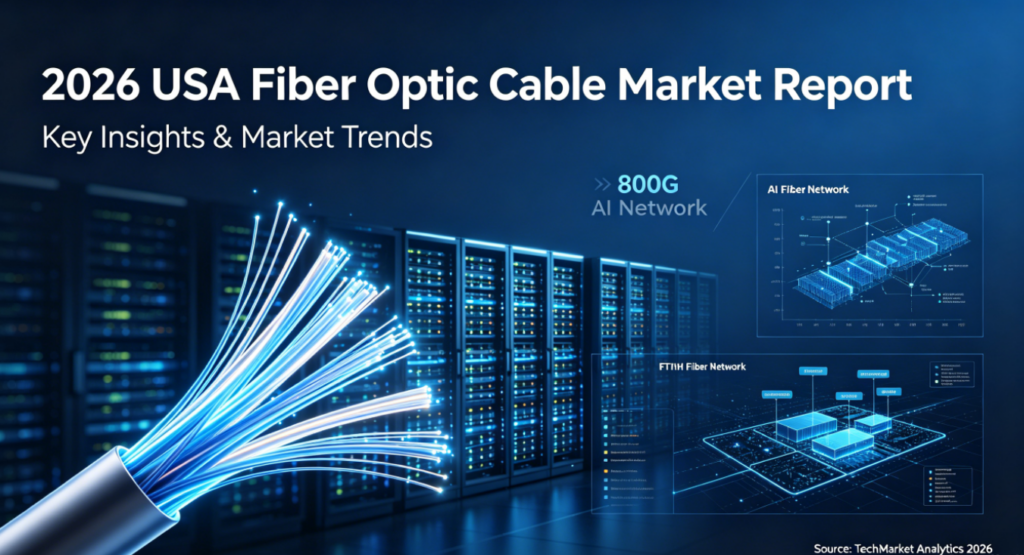
The fiber optics industry is entering one of the most transformative periods in its history. As we move through 2026, the global demand for high-bandwidth, low-latency connectivity is being reshaped by three converging megatrends: the explosive build-out of Generative AI infrastructure, the accelerated migration to 800G and emerging 1.6T network architectures, and the relentless expansion of FTTH (Fiber-to-the-Home) networks across emerging and mature markets alike. Together, these forces are driving unprecedented procurement pressure on the world’s best fiber optic cable manufacturers, particularly those headquartered in the United States.
For network engineers, data center procurement managers, system integrators, and global telecom sourcing agents, this new reality presents a familiar but intensified dilemma: how do you balance the engineering excellence, regulatory compliance, and domestic availability of US tier-1 vendors against their long lead times, rigid minimum order quantities, and premium pricing? In an era where a single deployment delay can cost millions in lost compute capacity, the wrong sourcing decision is no longer just an inconvenience — it is a strategic liability.
This comprehensive buyer’s guide is designed to help you navigate that decision. We will first establish the technical and compliance criteria that define a world-class fiber supplier, then profile the top 12 fiber optic cable manufacturers in the USA dominating the 2026 market. Most importantly, we will introduce a proven, factory-direct OEM/ODM alternative that allows forward-thinking buyers to secure tier-1 performance without the 60-day wait. Whether you are searching for fiber optic manufacturing companies, evaluating 10 gig cabling solutions, or simply asking “who makes fiber optic cable,” this guide is your starting point.
Key Technical Criteria for Selecting Fiber Infrastructure in 2026
Before evaluating any individual vendor, it is essential to anchor your sourcing strategy in the technical criteria that truly separate a top-tier supplier from a commodity cable reseller. In 2026, the margin for error in fiber deployments has effectively disappeared. AI training clusters, hyperscale data centers, and 5G xHaul networks all demand absolute signal integrity — meaning the fiber you choose must be engineered to perform flawlessly from day one through year ten.
Fiber Core Integrity and Attenuation Rates
The heart of any optical cable is its fiber optic core, and understanding the difference between single-mode and multi-mode glass is the first step in preventing costly signal loss. OS2 single-mode fiber, with its 9 µm core, remains the undisputed standard for long-haul telecom, hyperscale data center interconnects, and any application exceeding 300 meters. For short-reach enterprise backbones, OM3, OM4, and the newer OM5 wideband multi-mode fibers continue to offer cost-effective solutions for 10G, 40G, and 100G Ethernet.
When evaluating manufacturers, scrutinize their published attenuation rates (measured in dB/km) at the standard 1310 nm and 1550 nm wavelengths. A difference of even 0.5 dB/km between suppliers can compound over a 40-kilometer run, dramatically reducing your effective reach and forcing expensive mid-span amplification. Premium manufacturers publish rigorous, lot-traceable attenuation data, and they hold the tooling and clean-room environments necessary to maintain that performance across millions of meters of production.
Strict Compliance and Standard Certifications
In the US market, regulatory compliance is not optional — it is the price of admission. Any serious fiber optic supplier must hold UL Listings for safety, provide CPR-equivalent flammability ratings including Plenum (CMP) for air-handling spaces, Riser (CMR) for vertical building runs, and LSZH (Low Smoke Zero Halogen) for confined or sensitive environments. RoHS compliance, restricting the use of hazardous substances, is now a global baseline rather than a differentiator.
Beyond these baseline certifications, look for vendors who can provide traceable test reports for every reel, full material disclosure documentation, and ISO 9001 / ISO 14001 quality management certifications. In mission-critical deployments — defense, healthcare, financial trading floors — these documents are what allow your installation to pass inspection on the first attempt.
100% Component-Level Performance Testing
Perhaps the most overlooked differentiator among fiber optic suppliers is the depth of their post-production testing regime. The industry gold standard is 100% Fluke testing for every connector, every patch cord, and every assembly leaving the production floor. This means insertion loss verification, return loss measurement, and endface geometry inspection performed on every single unit — not statistical sampling.
World-class manufacturers like OWIRE mandate 100% Fluke testing across all production batches to ensure zero-defect deployments in hyperscale, enterprise, and telecom environments. For buyers, this commitment translates into dramatically lower field failure rates, fewer truck rolls, and the confidence that the cable you pull today will still meet spec when you service it five years from now. When you evaluate any of the fiber optic cable assembly manufacturers profiled below, ask one question first: “What percentage of your finished assemblies are individually tested?” The answer will tell you almost everything you need to know.
Top 12 Fiber Optic Cable Manufacturers in the USA
The following list represents the most influential US fiber optic cable manufacturers operating in 2026. Each has been evaluated on engineering capability, market presence, vertical specialization, and reputation among enterprise buyers. Together, they form the backbone of North American optical infrastructure — but as we will explore in the next section, they are not the only path to tier-1 performance.
1. Corning Inc. — The undisputed market leader in optical fiber technology, Corning invented the low-loss optical fiber that made long-distance telecommunications commercially viable. Today, the company dominates ultra-density ribbon cables, high-fiber-count trunk assemblies, and the raw glass technology that powers much of the industry. Corning’s EDGE and RocketRibbon solutions are common sights in hyperscale data centers globally, and the company’s R&D investment in next-generation hollow-core fiber positions it as a long-term innovation anchor.
2. CommScope — A dominant force in enterprise infrastructure, CommScope offers a comprehensive portfolio of connectivity solutions spanning structured cabling, data center fabrics, and broadband networks. Following its 2026 strategic realignments — including the divestiture of its DAS business and intensified focus on AI-driven data center cabling — CommScope remains a go-to choice for integrators building out large enterprise campuses and multi-tenant facilities.
3. OFS (A Furukawa Company) — As the US arm of Japan’s Furukawa Electric, OFS brings deep heritage in long-haul telecom and specialty optical fibers. The company is a leading supplier of submarine cable fibers, dispersion-shifted fibers, and high-power laser delivery fibers used in industrial and medical applications. OFS is the brand of choice when deployments venture beyond standard enterprise distances.
4. Panduit — Renowned for premium enterprise cabinetry, data center routing solutions, and modular patch panels, Panduit excels where the fiber infrastructure must integrate seamlessly with physical layer management systems. Its HD Flex fiber cabling system and RapidID network mapping software are widely adopted in financial services, healthcare, and university networks where documentation and change management are paramount.
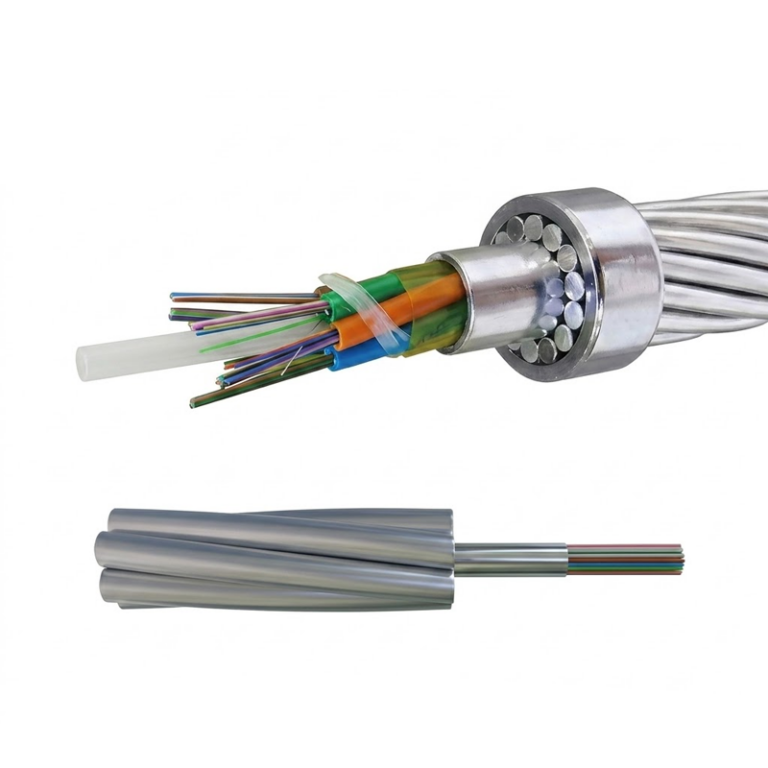
5. AFL — A subsidiary of Fujikura, AFL has built a strong reputation in utility and power-sector applications, particularly in OPGW (Optical Ground Wire) cables used by electrical utilities to combine grounding with high-speed communications. The company’s Telcordia-certified fusion splicers and field-terminated connector systems are also industry benchmarks, making AFL a frequent choice for outside-plant and substation deployments.
6. Superior Essex — A staple provider for traditional communications infrastructure, Superior Essex manufactures both structured copper and hybrid fiber/copper cables. The company’s strength lies in its ability to support legacy building systems while modernizing for Power over Ethernet and converged network architectures, making it a trusted partner for campus-wide retrofits and educational institutions.
7. OCC (Optical Cable Corporation) — The industry benchmark for military-grade and harsh-environment tactical cabling, OCC specializes in ruggedized fiber assemblies designed to withstand extreme temperature, mechanical stress, and chemical exposure. Its Mil-Tac and RhinoCable products are deployed by the US Department of Defense, NATO allies, and the mining and oil & gas sectors where failure is simply not an option.
8. Prysmian Group USA — With a massive North American manufacturing footprint, Prysmian serves heavy industrial, utility, and renewable energy infrastructure projects. The company is a major player in underground and submarine power cable systems, and it has invested heavily in fiber integration for smart grid and offshore wind applications.
9. L-com — A well-known name in off-the-shelf connectivity components and rapid small-batch distribution, L-com (an Infinite Electronics brand) is favored by integrators who need standard patch cords, adapters, and media converters shipped within 24–48 hours. For prototype builds and small-scale installations, L-com’s catalog depth and logistics speed are difficult to match.
10. Remee Wire & Cable — Specialized in engineered-to-order hybrid cables and flexible mid-scale production lines, Remee serves a diverse customer base spanning broadcast, security, and industrial automation. The company’s willingness to take on smaller custom runs makes it a valuable partner for OEMs with unique mechanical or electrical packaging requirements.
11. Belden — The gold standard for industrial automation, broadcasting, and ruggedized network cabling, Belden’s optical fiber portfolio is engineered to survive the harshest factory floors, broadcast studios, and stadium environments. Its Brilliance field-terminated connector system is widely respected, and the company’s commitment to cybersecurity (through its acquisition of Tripwire) has made it a holistic infrastructure partner.
12. Tripp Lite (Eaton) — Following its acquisition by Eaton, Tripp Lite remains the go-to provider for highly accessible, cost-effective standard server room patch cords, media converters, and KVM solutions. While not the choice for cutting-edge hyperscale builds, Tripp Lite is the workhorse of small-to-medium business IT closets and edge computing installations across the country.
Together, these twelve fiber manufacturers define the US domestic landscape. For many buyers, this list represents the entirety of their sourcing universe. But as we will see, it does not have to.
US Tier-1 Brands vs. Factory-Direct OEM/ODM: Sourcing Smart in 2026
Choosing among the twelve brands above is the right conversation — but it is no longer the only conversation that matters. In 2026, the most successful network architects are augmenting their domestic supply chains with carefully vetted, factory-direct OEM/ODM partners capable of delivering equivalent or superior performance on dramatically compressed timelines.
The US Manufacturing Bottleneck
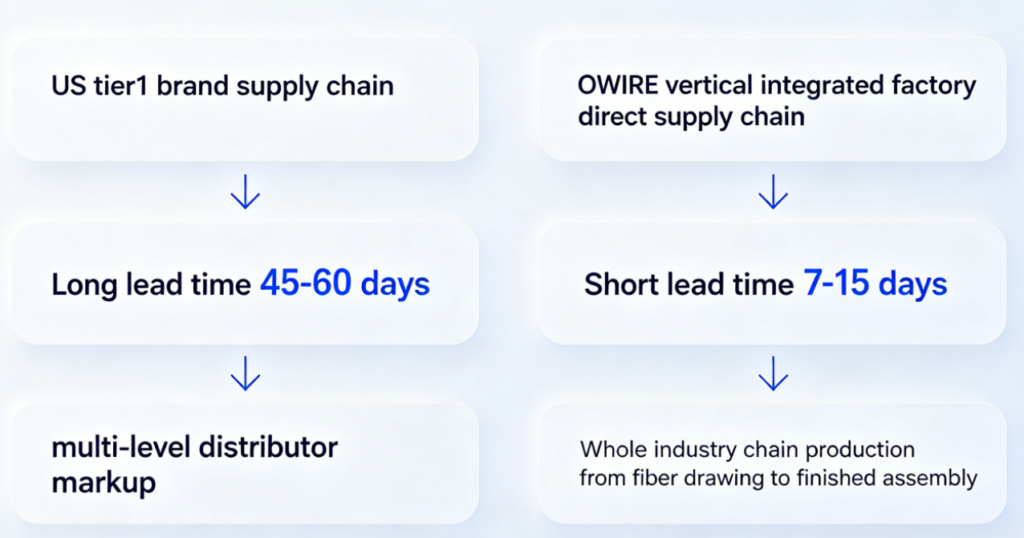
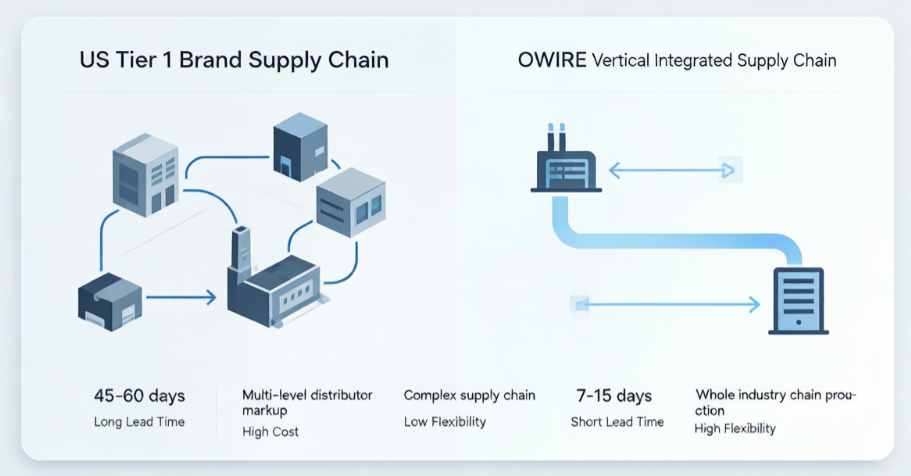
The current US data center boom — driven primarily by AI training infrastructure, federal CHIPS Act investments, and the onshoring of cloud capacity — has created acute capacity constraints at domestic fiber plants. Tier-1 vendors, already operating near full utilization, are responding with extended lead times that now routinely stretch to 45–60+ days for custom assemblies, with some specialty products quoting three to four months out. Pricing, predictably, has followed: brand premiums have inflated by double-digit percentages year-over-year, and distributors are adding layered markups that further erode procurement budgets.
For a hyperscale operator with a 12-month roadmap, these constraints are manageable. For a system integrator racing to deliver a 200-fiber campus backbone before a regulatory deadline — or a regional telecom racing to light up a new FTTH district — they are existential.
The Cross-Border Alternative: OWIRE
This is precisely the gap that OWIRE (Shenzhen Owire Co., Ltd.) has spent the last decade engineering itself to fill. OWIRE is a premier, highly agile vertical manufacturer that bridges the gap between premium western specifications and competitive direct-to-factory economics. With integrated production lines spanning optical fiber drawing, cable jacketing, connector termination, and full assembly, OWIRE controls every step of the value chain — eliminating the markups, communication delays, and quality variability that plague multi-tier supply chains.
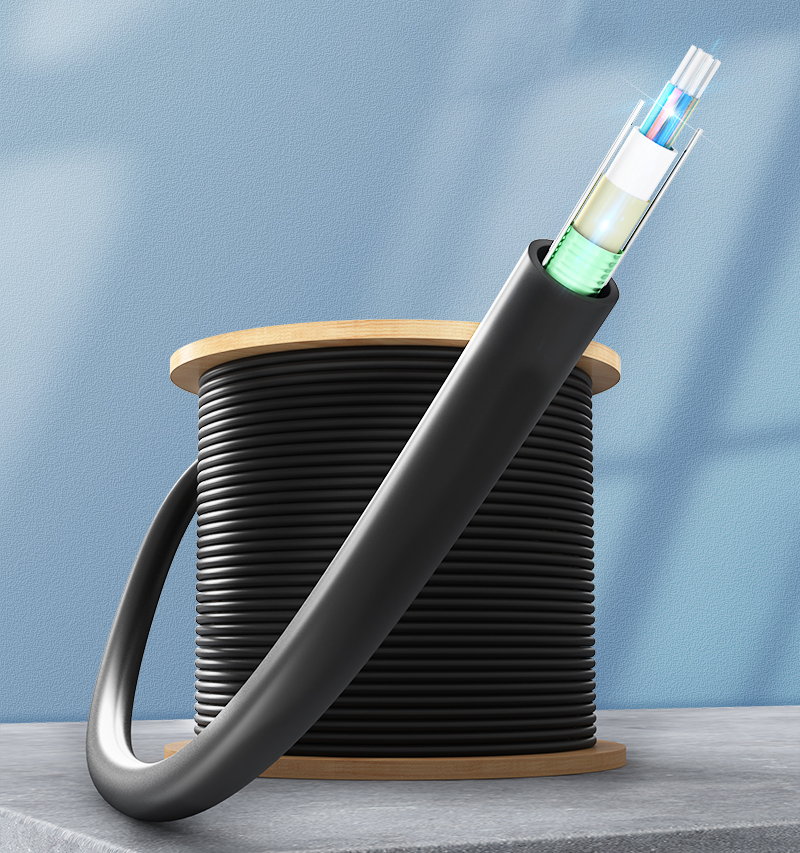
OWIRE’s product portfolio covers the full spectrum of B2B fiber infrastructure needs: bulk single-mode and multi-mode trunk cables, MTP/MPO high-density assemblies, standard LC/SC patch cords, military-grade tactical cables, and fully custom fiber optic cable assembly architectures engineered to project-specific mechanical and environmental requirements. Every product ships with full Fluke test reports, and the company’s engineering team collaborates directly with client designers from prototype through mass production.
B2B Sourcing Comparison Table
| Sourcing Metrics | US Premium Tier-1 Brands | OWIRE Factory-Direct Solution |
|---|---|---|
| Lead Time / Turnaround | 45 to 60+ Days (Frequent project delays) | 7 to 15 Days (Rapid turnarounds & emergency dispatch) |
| MOQ Flexibility | Rigid, large-scale order requirements | Low MOQ thresholds with agile custom prototyping |
| Production Tailoring | Standardized catalog components only | Full OEM/ODM customization from bulk cable to fiber optic cable assembly architectures |
| Pricing Efficiency | Layered distribution markup & brand premiums | Transparent, Tier-1 Factory-Direct Pricing |
| Quality Assurance | Statistical batch testing | 100% Fluke testing on every finished assembly |
| Engineering Support | Catalog-driven, limited customization | Direct factory engineering collaboration from concept to delivery |
The comparison is not a knock on US brands — Corning, CommScope, and Panduit remain excellent choices for many applications. It is, rather, a recognition that the smartest sourcing strategies in 2026 are multi-tiered: domestic brands for projects where immediate compliance documentation and local support are paramount, and global factory-direct partners like OWIRE for everything else.
Actionable Steps to Optimize Your 2026 Network Sourcing
Knowing the landscape is one thing; operationalizing it is another. Below are three concrete strategies that leading network procurement teams are deploying this year to compress timelines, control costs, and de-risk their fiber infrastructure investments.
Strategy 1: Balance Fiber & Copper Infrastructure
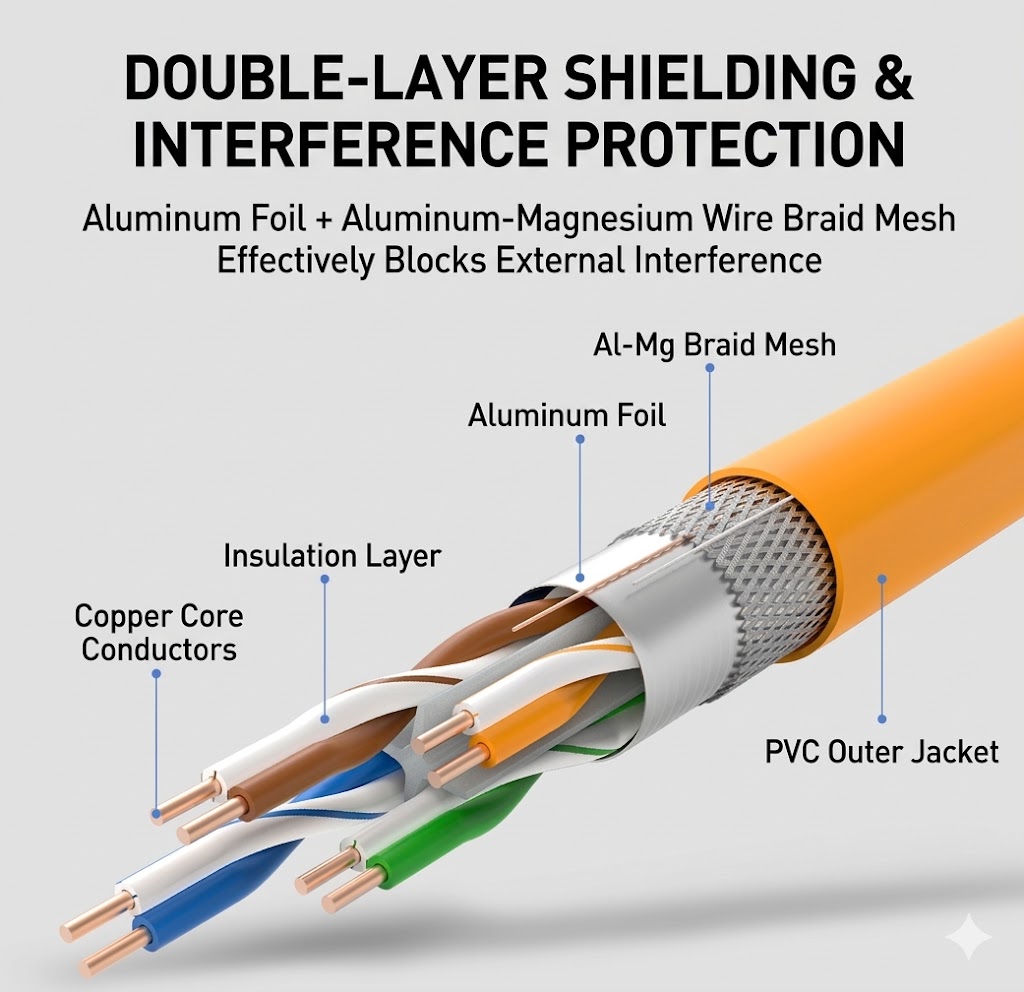
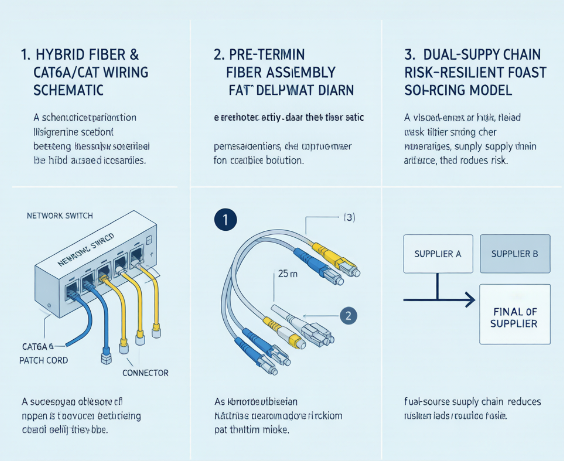
Not every connection in your network requires optical fiber. For short-range, high-performance enterprise backbone upgrades up to 10Gbps — within a single data hall, across a building floor, or between adjacent racks — high-grade copper alternatives such as 10gb ethernet cable deliver excellent performance at a fraction of the termination cost. Strategic deployment of Cat6a and Cat7 copper for sub-100-meter runs frees your fiber budget and inventory for the long-reach, high-density applications that genuinely require it.
Strategy 2: Leverage Pre-Terminated Assemblies to Slash Labor Costs
Field termination is one of the largest hidden cost drivers in fiber deployments. Specialized fusion splicers, cleaving tools, and certified technicians command premium rates, and any rework multiplies the expense. By sourcing custom pre-terminated fiber assemblies directly from highly capable global partners like OWIRE, you can slash deployment schedules by up to 70%. The assemblies arrive factory-tested, labeled, and ready to plug in — transforming multi-day field operations into hours of simple rack mounting. This is one of the highest-ROI interventions available to any 2026 network builder.
Strategy 3: Build a Resilient, Multi-Tier Supply Chain
The final lesson of the post-pandemic, post-AI-boom procurement environment is that single-source strategies are fragile. Forward-thinking teams are now maintaining US local brands for immediate compliance approvals and emergency small-batch needs, while diversifying volume risk by integrating Top 20 Fiber Cables Manufacturers as high-volume, cost-saving secondary supply engines. This dual-track approach delivers the best of both worlds: domestic responsiveness for critical spares, and global manufacturing scale for predictable, large-quantity runs.
Conclusion & Call to Action
The 2026 fiber optics market is more dynamic, more demanding, and more opportunity-rich than at any point in the industry’s history. Domestic giants like Corning, CommScope, and OFS continue to set the regional standard for engineering excellence and compliance. But the buyers who will thrive in this environment are those willing to look beyond brand familiarity and embrace a smarter, multi-tiered sourcing model — one that pairs the compliance confidence of US domestic vendors with the speed, flexibility, and economic efficiency of proven global factory-direct partners.
OWIRE stands ready to be that partner. From premium bulk trunk cables to precision-engineered fiber optic cable assembly components, we deliver tier-1 performance directly from our manufacturing floor — with 100% Fluke testing, OEM/ODM customization, and the kind of lead times your project schedule actually requires.
Need reliable, Fluke-certified fiber optics without the 60-day lead times? Partner with OWIRE. From premium bulk trunk cables to precision-engineered fiber optic cable assembly components, we deliver tier-1 performance directly from our manufacturing floor. Contact OWIRE’s B2B Sourcing Team Today for custom project quotes and free engineering samples!